

Friday, 18 May 2012

歡迎投稿 - May 2012
Welcome for your contribution
We welcome your contribution. Please keep your psychology-related
article to a maximum of 800 words and send it with article title,
references your full name and contact number by email to salford.psy.hk@gmail.com with subject: “Contribution to Psycholic” on or before 27th May, 2012. Plagiarism is not accepted.
歡迎投稿
歡迎閣下的參與,請把不多於800字有關心理學的作品,連同文稿主題、參考文獻及閣下的姓名和聯絡電話,於2012年5月27日前以電郵投稿至 salford.psy.hk@gmail.com ,郵件主題註明:「Contribution to Psycholic」。抄襲作品恕不接受。
Laugh Out Loud - May 2012
Hi, buddies! Did you hear Freud? He is a great
psychologist. Please tell me something about him! Find out 7 things about him now!
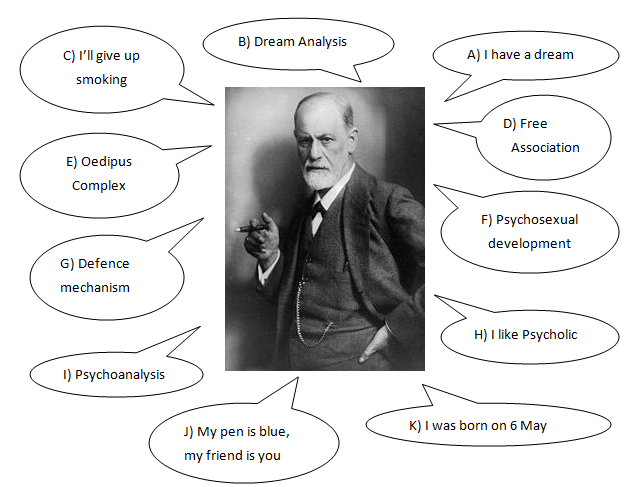
Please send the answers with your FULL NAME and CONTACT NUMBER to salford.psy.hk@gmail.com on or before 25th May, 2012. Those who got all correct will enter our lucky
draw to win a special prize! Enjoy LOL
Dan Chung
PSYCHOLOGY
|
FREUD
|
PERSONALITY
|
EMOTION
|
PHOBIA
|
SUPEREGO
|
PROJECTION
|
UNCONSCRIOUS
|
PERCEPTION
|
答對上期問題而被抽中的讀者是
Tree Leung
幸運兒可得到
護手霜 及 潤唇膏 各1支


PsyPanacea - May 2012
Write
to Panacea and you might be answered! We want to wipe that frown off
your face. Remember, all askers remain anonymous. Just drop your
question into our mailbox, or write to us at salford.psy.hk@gmail.com.
The Goddess awaits your worries and woes.
Kristen Pereira
Dear Panacea,
I feel very depressed every time I go to my Facebook page. I open the IE
browser hoping that somebody would write on my wall, or comment on my photos or
status updates. Everybody I know has such a lively facebook page. I look at the
number of friends I have. I would say it’s about a healthy amount, without
strangers or random people. In spite of this, nobody ever talks to me. Does
this mean I am a bad person? Am I boring? Why does everybody ignore me?
-Facebook-ally depressed
 |
| Image: wellbeing-spport.com |
Pickpocket - May 2012
Dear readers,
For example, since you know a friend of yours usually
bites his lips when he is nervous, then you will know why he would do so before
his exams.
No.5 -Setting The Baseline
Pick their thoughts! They cannot hide their expression
and hold their intentions from your eyes!
Owing to the large amount of words and heavy
reading in the last two installments, I have decided to use more simplistic
explanations and less words so that you guys can read and relax.
Cheers!
Jason
Editor of Pickpocket
Could you spot out the common behavior
pattern among people? Have you combined the background into your pickpocket
skill? I am sure you did really well. It is best when you can see through the
common behavior within people and also the interaction between people’s
behavior and the background.
The Introduction of Principles, Reading NVB
In the last installment, I emphasized the
importance of background environments when reading people and the common
behavior in human society. This time I am going to present the opposite; the
idiosyncratic nonverbal behavior and the personal baseline.
No.4 -Idiosyncratic Nonverbal Behavior
Idiosyncratic
nonverbal behavior simply means the unique behavior of individuals.
 |
| Photo: greysonchanceuniverse.blogspot.com |
If you want to read someone’s unique
behavior, the only group of people you can read accurately are those people who
are close to you. This is because they are the people who interact with you the
most, including your family members, colleagues, friends and your teachers, as
compared to those people you do not usually meet. The more time you spend with
a person or interact with, the easier it is to explore this kind of
behavior.
No.5 -Setting The Baseline
 |
| Photo: LieSpotting.com |
Previously I
taught you how to set the baseline for the majority. Today, I am going to teach
you how to set the baseline for individuals, to pickpocket them every time you
interact with them, as it is how you will usually do nonverbal behavior
reading.
Just like
rule No.4, the baseline should be set individually because every person has his
own baseline, because of his own unique experiences. You should observe how
those people who are close to you sit, where and how they put their hands and
feet, and especially their usual postures and facial expressions, viewing angle
(which is how much they tilt, rise or bow their head), even how they lift or
put things down.
Put simply, your task this time is to identify when and
how the people who close to you engage in their usual behavior. Choose a
subject among your friend or classmate, observe him/her for a month and list
out his/her behavior during lunch time or recess, etc. Then identify those
behaviors you listed out and group them into usual and special group.
 |
| Photo: FreeMoviePosters.net |
Then every
time he/she is talking, you have the database of him/her to read his/her
nonverbal behavior.
In the coming installment, I will write about the
principle No.6 Multiple Implications and No.7 Sudden Change of Personal
Behavior
Practice
makes perfect!
Jason Lam
References:
Navarro, J., &Karlins, M. (2009).What every BODY
is saying an ex-FBI agent's guide to speed reading people (Kindle
ed.). S.I.: William Morrow Paperbacks
Defense Mechanisms - May 2012
Denial
 |
| Picture: Venus Lai |
Aimlessly denying the fact is detrimental! You should make clear of the fact before you claim the innocence. Always believe in fact, not your sense!
Venus Lai
Reference:
Friedman,
H.S. & Schustack, M.W. (2009). Personality:
classic theories and modern research. Hong Kong: Pearson.
Pillars in the Making - May 2012
Do you know which development level is your moral
ability up to?
I want
to share with you a story about morality this month, and see how you will
decide to do.
“A man
is standing outside a pharmacy shop, and thinking whether to go in or not. He wants
to have a particular medicine, because his wife is suffering from a serious
type of cancer, which the medicine can help improving her symptoms and will
make her feel better. But this type of medicine is very expensive, and they cannot
afford buying it. Now the man is standing right in front of the shop, he can
see the position of pills in the shop, and struggling what should he do, he has
only got two choices; first, break into the shop and steal the pills for his
wife, second, go back home and wait for miracles to happen.”
Try to imagine
that if you are the man and you know deeply from your heart that stealing is against
the law, but your wife really needs those pills for her sickness, what will you
do?
After
you make your decision, you can find out which moral development stages you are
on at the table below.
Stage
1
|
Stage
2
|
Stage
3
|
Stage
4
|
Stage
5
|
Stage
6
|
Punishment
Orientation
|
Naïve
reward orientation
|
Good
boy/girl orientation
|
Authority
Orientation
|
Social
Contact Orientation
|
Individual
principles and conscience orientation
|
Right
or Wrong is determined by what is punished.
|
Right
or wrong is determined by what is rewarded.
|
Right
or wrong is determined close other approve or disapprove
|
Right
or wrong is determined by society’s rules and laws, which should be obey
rigidly.
|
Right
or wrong is determined by society’s rules which are viewed as flexible rather
than absolute.
|
Right
or wrong is determined by abstract ethical views that emphasize equity and
justice.
|
Stage theory of moral
development- Lawrence Kohlberg
Vicky Wong
References:
Kohlberg,
L. (1963). The development of children's orientations toward a moral order: I.
Sequence in the development of moral thought. Vita Humana, 6, 11-33.
Killen,
M., Margie, N. G., & Sinno, S. (2006). Morality in the context of
intergroup relationships. In M. Killen & J. G. Smetana (Eds.), Handbook of moral development (pp.
155-183). Mahwah, NJ: Lawrence Erlbaum Associates.
Psych-Action - May 2012
活動名稱:思覺失調的康復錦囊
類型: 講座
日期:2012年5月20日 星期日
時間:下午2時30分
地點: 新蒲崗公共圖書館
熱線:9167 4644 / 6879 3439
報名:需要
主辦機構:賽馬會思覺健康計劃
活動名稱:思覺失調之迷 – 追尋患病成因:基因?環境?
類型: 講座
日期:2012年5月26日 星期六
時間:下午2時30分
地點: 文化中心行政大樓4樓
熱線:2651 8132 / 6879 3439
報名:需要
Organiser: Dept of Psychology, HKU
Name of Activity: What's different about group psychotherapy? What a group therapist needs to know
Type: Seminar
Speaker: Dr Nina Thomas
NYU Postdoctoral Program in Psychotherapy & Psychoanalysis, USA
Date: 23 May, 2012 (Wednesday)
Time: 11:30am - 12:30pm
Venue: Rm 624, Knowles Building, HKU
Name of Activity: What's different about group psychotherapy? What a group therapist needs to know
Type: Seminar
Speaker: Dr Nina Thomas
NYU Postdoctoral Program in Psychotherapy & Psychoanalysis, USA
Date: 23 May, 2012 (Wednesday)
Time: 11:30am - 12:30pm
Venue: Rm 624, Knowles Building, HKU
Sunshine is always with you - May 2012
如何培養成一位樂觀者
如果一個人無論面對任何不好的事情,都保持正面思考的話,可想而之這人一定很開心和健康。
因為他擁有一個人生最重要的武器,就是「樂觀」的態度。但是如果樂觀者樂觀過度的話,例如以為自己考試一定會合格而不去溫習,這也屬於負面思考。
到底如何培養一個正面思考模式?
美國加州大學心理學家Sonja Lyubomirsky在完成幾個研究之後,提出八點具體可行的做法:
1. 心存感激
開一本「感恩簿」,將三至五件心存感激的事項記下來。可以是瑣碎事情(上學準時),可以是驚喜之事(突然間朋友送禮物)。每週在固定時間紀錄一次,使其成為習慣,內容愈常更換愈好。
2. 時時行善
例如排隊時,讓趕時間的人排前面,每周日固定拿晚餐給鄰居那位老人,對朋友或陌生人仁慈一點,這樣會產生積極效果,從而讓自己感覺很慷慨、很有能力,也會贏得別人笑容、讚許及仁慈回饋。這些都會讓人感覺快樂 ,達至「雙贏」。
3. 品嚐樂趣
心理學家建議,不妨將快樂時光如照相一般「印存腦海中」,例如記下雪糕的甜味、家庭的天倫之樂。當你在痛苦時把它翻出來回味,這會令你有一種溫暖的感覺 。
4. 感謝貴人
如果有人在你人生的十字路口提攜或指導過你,要趕快向他答謝。內容越詳盡越好,最好是親自答謝。
5. 學習諒解
 |
| Photo: Smiley |
如果有人傷害你、誤會你,就寫封信給他表示原諒,也讓自己怒氣怨恨得以發洩。無法諒解他人會讓自己積怨、心懷報復,但諒解則會讓你大步往前。
6. 珍惜親友
對生活滿意與否,其實與錢財、名利、甚至健康關係不大。最大因素是人際關係的和諧。多花點時間及精力在朋友、親人身上。例如多打電話關心朋友 、多回家晚飯。
7. 照顧身體
充足睡眠、運動、伸展四肢、笑口常開這些行為都可以令你的心情得以改善,更可提升生活滿意度。
8.因應難關
人生少不免有些難關,而宗教信仰可助你度過。就算念一些平凡無奇的鼓勵說話也可以的,例如:「事情總會過去。這次也一樣!」、「任何打不死我的事,會讓我變得更堅強。」關鍵就在,我必須相信這些說話。
所以從今天開始培養一個正面思考模式吧!
Woody Yip
References:
SeligmanE.P.Martin. (2003). 真實的快樂. (洪蘭, 譯者) 臺灣: 遠流.
Subscribe to:
Posts (Atom)